Decoding F1 2026: The Hybrid Power Unit Revolution Explained
Formula 1, a sport synonymous with cutting-edge technology and relentless innovation, stands on the cusp of another monumental transformation. As the pinnacle of motorsport, F1 routinely overhauls its rulebook, pushing the boundaries of engineering and performance. The upcoming 2026 season heralds one of the most significant shifts in **f1 power unit regulations** since the introduction of the V6 turbo-hybrid engines in 2014. This impending revolution promises to reshape the competitive landscape, redefine driving dynamics, and steer the sport further towards a sustainable future.
The changes are not merely incremental; they represent a fundamental reimagining of what propels an F1 car. Engineers across the globe are poring over these new directives, seeking to uncover the next performance advantage, while fans eagerly anticipate a new era of racing. Understanding these complex **f1 power unit regulations** is key to appreciating the engineering marvels and strategic battles that lie ahead.
The Dawn of a New Hybrid Era: A 50/50 Power Split
Currently, Formula 1 power units operate with an approximate 80% contribution from the internal combustion engine (ICE) and 20% from electronic power. This balance has defined the hybrid era for a decade, showcasing incredible efficiency gains and power output. However, 2026 will see a dramatic re-calibration, shifting to an even 50% ICE and 50% electronic power split.
This move is far from a simple numbers game; it represents a profound philosophical shift in F1's powertrain philosophy. To achieve this unprecedented equilibrium, engineers must rethink every aspect of the power unit:
*
Increased Reliance on Electric Power: The doubling of electronic power output means battery technology, energy recovery systems, and sophisticated energy management software will become even more critical. Teams will need robust, high-density batteries capable of delivering sustained bursts of power.
*
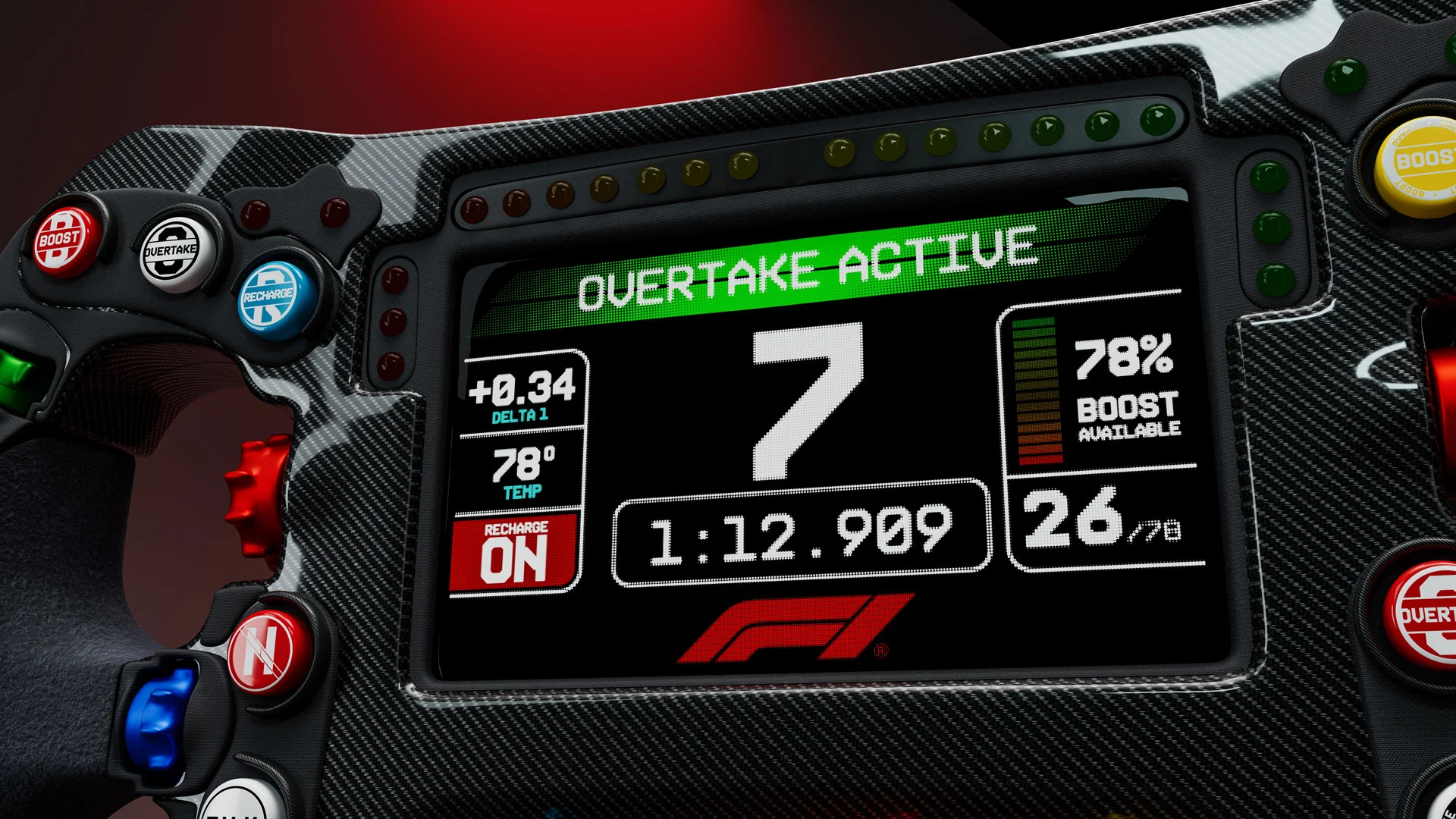
Strategic Energy Management: Drivers will play an even more active role in managing their energy stores throughout a lap and a race. The ability to deploy and harvest electrical energy efficiently will be a defining factor in lap time and race strategy, demanding exceptional driver-car synergy.
*
Thermal Efficiency of the ICE: Despite the increased electrical contribution, the internal combustion engine remains crucial. With a smaller relative share of the total power, the ICE must become even more thermally efficient to contribute its 50% effectively, operating under more constrained conditions.
*
Road Relevance: This 50/50 split mirrors advancements in road car technology, where plug-in hybrids are becoming increasingly prevalent. F1 continues to serve as a high-speed laboratory, accelerating the development of technologies relevant to the automotive industry.
The challenge for manufacturers lies in seamlessly integrating these two distinct power sources into a cohesive, supremely efficient, and reliable unit. It's a delicate balance of mechanical and electrical engineering that promises to elevate the complexity and ingenuity of F1 power unit design.
MGU-H's Farewell and MGU-K's Ascendance
Perhaps one of the most talked-about changes within the new **f1 power unit regulations** is the removal of the Motor Generator Unit – Heat (MGU-H) and the significant boosting of the Motor Generator Unit – Kinetic (MGU-K). This strategic adjustment aims to simplify certain aspects of the power unit while simultaneously increasing the potency of electrical energy recovery.
The MGU-H bows out
The MGU-H has been a cornerstone of F1's hybrid power units since 2014, a marvel of engineering designed to recover waste heat energy from the exhaust gases and convert it into electrical power. It also played a crucial role in managing turbo lag, ensuring instantaneous throttle response.
However, its extreme complexity and high development costs became a significant barrier to entry for potential new power unit manufacturers. The technology required deep specialization and substantial investment, contributing to a substantial performance gap between established engine suppliers and any newcomers. Its removal for 2026 is a deliberate move by the FIA to level the playing field, making it more attractive for automotive giants like Audi to join the sport and for existing manufacturers to remain competitive. This simplification aims to foster greater competition and potentially more diverse engine suppliers on the grid. For a deeper dive into this, see our article:
F1 2026 Power Units: MGU-H Exit, 50/50 Hybrid & MGU-K Boost.
The MGU-K takes center stage
With the MGU-H removed, how will F1 compensate for the lost energy recovery and achieve its ambitious 50/50 power split? The answer lies largely in the significantly enhanced MGU-K (Motor Generator Unit – Kinetic). The MGU-K, which has worked alongside the MGU-H since 2014, harvests kinetic energy generated during braking and deceleration, converting it into electrical power stored in the battery for later deployment.
Under the new 2026 **f1 power unit regulations**, the MGU-K's power output will be dramatically increased from its current 120 kilowatts to a staggering 350 kilowatts – nearly three times its current capability. This substantial boost is to be achieved through innovative design directions focusing on:
*
Increased Power Density: Engineers will miniaturize the MGU-K components while increasing their energy handling capabilities.
*
Enhanced Efficiency: Minimizing energy losses during both harvesting and deployment will be paramount.
Crucially, this substantial increase in power will be achieved without a proportional increase in the unit's size or mass, ensuring the overall weight of the power unit and car remains manageable. This supercharged MGU-K will become the primary source of electrical energy recovery, allowing for potent bursts of acceleration out of corners and potentially creating more strategic overtaking opportunities. Drivers will have a significantly more powerful "push-to-pass" equivalent at their disposal, requiring precise management to maximize its impact.
Fueling the Future: Sustainability and Efficiency
Sustainability is a driving force behind many of the new **f1 power unit regulations**, and the 2026 era will see a substantial leap forward in F1's commitment to environmental responsibility. A core pillar of this commitment is the introduction of 100% sustainable fuels and a significant reduction in the permitted fuel flow.
*
100% Sustainable Fuels: From 2026, F1 cars will run on entirely sustainable fuels, meaning they are developed with a net-zero carbon footprint. These fuels will be synthetic, produced using advanced techniques like carbon capture or bio-sources, further cementing F1's role as a pioneer in future energy solutions. This aligns with F1's ambitious goal of being net-zero carbon by 2030.
*
Reduced Fuel Flow: In tandem with the move to sustainable fuels, there will be a substantial reduction in the permitted fuel flow to the engine. While previously engines were allowed up to 100 kg of fuel per hour, this will be significantly cut for 2026 (the exact figures are subject to final confirmation and technical detail, but the principle is clear).
This reduction in fuel flow places an even greater emphasis on the thermal efficiency of the ICE. Teams must extract every ounce of power from less fuel, pushing the boundaries of combustion technology. It transforms the ICE into an ultra-efficient generator, working in perfect harmony with the high-power MGU-K to achieve the 50/50 power split. This holistic approach ensures that the entire power unit system is optimized not just for raw power, but for unparalleled efficiency and minimal environmental impact. For more on this, check out our article:
F1 2026 Engine Rules: Fuel Flow Cuts & A Level Playing Field.
The Broader Impact: Leveling the Playing Field and Fostering Innovation
The 2026 **f1 power unit regulations** are meticulously crafted to achieve a delicate balance between several critical objectives:
*
Enhancing Competition: By removing complex and costly components like the MGU-H and simplifying certain aspects of development, the FIA aims to lower the barrier to entry for new manufacturers and reduce the cost burden on existing ones. This fosters a more competitive environment, potentially leading to more engine suppliers and closer racing.
*
Driving Relevant Innovation: While simplifying some areas, the regulations push innovation in others. The focus on high-power density MGU-K units, advanced battery technology, sophisticated energy management software, and 100% sustainable fuels ensures that F1 continues to be a relevant testbed for cutting-edge automotive technologies. This continuous pursuit of efficiency and performance under stringent environmental mandates makes F1 a critical development platform for the future of mobility.
*
Sustainability Leadership: F1 is positioning itself as a leader in sustainable motorsport. The move to 100% sustainable fuels, combined with the significant increase in electric power, showcases the sport's commitment to reducing its environmental footprint and inspiring broader change within the automotive industry.
These technical regulations, overseen by the FIA, not only dictate car specifications but also profoundly impact the sporting spectacle. The strategic choices made by teams regarding energy deployment and recovery, combined with the inherent efficiency of their power units, will add a new layer of intrigue and challenge to every race weekend.
Conclusion
The 2026 **f1 power unit regulations** mark a pivotal moment in Formula 1's illustrious history. By embracing a 50/50 hybrid power split, removing the MGU-H, supercharging the MGU-K, and mandating 100% sustainable fuels, the sport is setting a new benchmark for performance, efficiency, and environmental responsibility. This audacious overhaul promises to deliver a new era of F1 defined by intense engineering challenges, strategic innovation, and exhilarating racing. As the countdown to 2026 continues, the world watches to see how teams and drivers will adapt to this revolutionary change, ushering in a thrilling new chapter for the pinnacle of motorsport.